
Article
CCC-plus from B, just several notches above a level that would indicate default.Pakistan¶s local currency debt rating was lowered to B-minus from BB-minus. Creditagency Moody¶s Investors Service cut its outlook on Pakistan¶s debt to negative fromstable due to political uncertainty, though it maintained the country¶s rating at B2.Thecost of protection against a default in Pakistan¶s sovereign debt trades at 1,800 basis points, according to its five year credit default swap, a level that indicates investors believe the country is already in or will soon be in default.The middle term however may be less turbulent, depending on the political environment.The EIU estimates that inflation should drop back to single digits in 2010, and thatgrowth should pick up to over 5% per annum by 2011. Although less than the previous 5year average of 7%, it would represent a overcoming of the present crisis wherein growthis a mere 3.5-4%.
[8]
Economic history
First five decades
This is a chart of trend of gross domestic product of Pakistan at market prices estimated
[9]
by the International Monetary Fund with figures in millions of Pakistani Rupees. See also[2]
YearGross DomesticProductUS Dollar ExchangeInflationIndex(2000=100)Per CapitaIncome(as % of USA)
1960 20,0584.76 PakistaniRupees3.371965 31,7404.76 PakistaniRupees3.401970 51,3554.76 PakistaniRupees3.261975 131,3309.91 Pakistani2.36
Rupees1980 283,4609.97 PakistaniRupees21 2.831985 569,11416.28 PakistaniRupees30 2.071990 1,029,09321.41 PakistaniRupees41 1.921995 2,268,46130.62 PakistaniRupees68 2.162000 3,826,11151.64 PakistaniRupees100 1.542005 6,581,10360.40 PakistaniRupees126 1.71Pakistan was a very poor and predominantly agricultural country when it gainedindependence in 1947 from Britain. Pakistan's average economic growth rate sinceindependence has been higher than the average growth rate of the world economy duringthe period. Averageannual real GDP growth rateswere 6.8% in the 1960s, 4.8% in the1970s, and 6.5% in the 1980s. Average annual growth fell to 4.6% in the 1990s withsignificantly lower growth in the second half of that decade.Industrial-sector growth, including manufacturing, was also above average. In the late1960s Pakistan was seen as a model of economic development around the world, andthere was much praise for its economic progression. Later, economic mismanagement ingeneral, and fiscally imprudent economic policies in particular, caused a large increase inthe country's public debt and led to slower growth in the 1990s. Two wars with India inSecond Kashmir War 1965 and Bangladesh Liberation War 1971 and separation of Bangladesh adversely affected economic growth.
[10]
In particular, the latter war broughtthe economy close to recession, although economic output rebounded sharply until thenationalizationsof the mid-1970s. The economy recovered during the 1980s via a policyof deregulation, as well as an increased inflow of foreign aid and remittances fromexpatriate workers.
Economic resilience
GDP Rate of Growth 1951-2007Historically, Pakistan's overall economic output (GDP) has grown every year since a1951recession. Despite this record of sustained growth, Pakistan's economy had, until afew years ago, been characterized as unstable and highly vulnerable to external andinternalshocks. However, the economy proved to be unexpectedly resilient in the face of multiple adverse events concentrated into an eight-year period ²
y
theAsian financial crisis;
y
economic sanctions² according toColin Powell, Pakistan was "sanctioned to the eyeballs"
[11]
;
y
lop recession;
y
severe rioting in the port city of Karachi;
y
a severedrought² the worst in Pakistan's history, lasting about four years;
y
heightened perceptions of risk as a result of military tensions with India ² withas many as 1 million troops on the border, and predictions of impending(potentially nuclear) war;
y
the military actions against militants in parts of the country;Despite these adverse events, Pakistan's economy kept growing, and economic growthaccelerated towards the end of this period. This resilience has led to a change in perceptions of the economy, with leading international institutions such as the IMF,World Bank, and the ADB praising Pakistan's performance in the face of adversity.Additional confirmation that the country's economy is not as weather-sensitive as had been previously perceived comes from a 2008 analysis that "examined 68 countries,quantifying their sensitivity to fluctuations in weather, using figures on GDP by industrysector and the sensitivity of particular sectors to given weather variables." The analysisfound that of the 68 countries, the "least weather-sensitive country was Pakistan."[3] [4] [5] Pakistan emerged as one of the best performers in the wake of the global financial crisis,even as a country waged a costly war against militants. Its domestically-driven economywas minimally affected and its banking sector boasted surplus liquidity while remaining unharmed
Next article:
Jokes for Fun (9 years ago)

About the game:
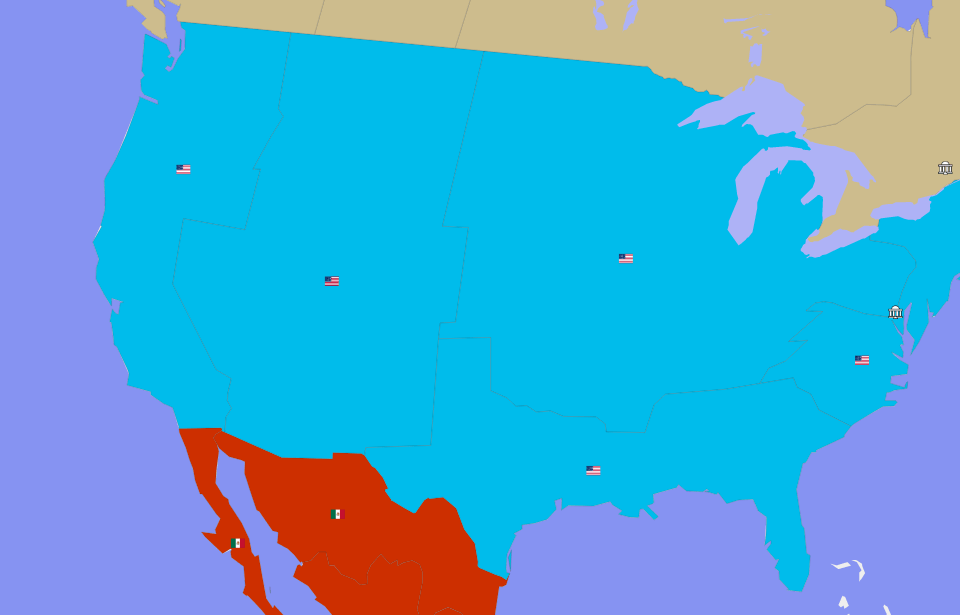
USA as a world power? In E-Sim it is possible!
In E-Sim we have a huge, living world, which is a mirror copy of the Earth. Well, maybe not completely mirrored, because the balance of power in this virtual world looks a bit different than in real life. In E-Sim, USA does not have to be a world superpower, It can be efficiently managed as a much smaller country that has entrepreneurial citizens that support it's foundation. Everything depends on the players themselves and how they decide to shape the political map of the game.
Work for the good of your country and see it rise to an empire.
Activities in this game are divided into several modules. First is the economy as a citizen in a country of your choice you must work to earn money, which you will get to spend for example, on food or purchase of weapons which are critical for your progress as a fighter. You will work in either private companies which are owned by players or government companies which are owned by the state. After progressing in the game you will finally get the opportunity to set up your own business and hire other players. If it prospers, we can even change it into a joint-stock company and enter the stock market and get even more money in this way.
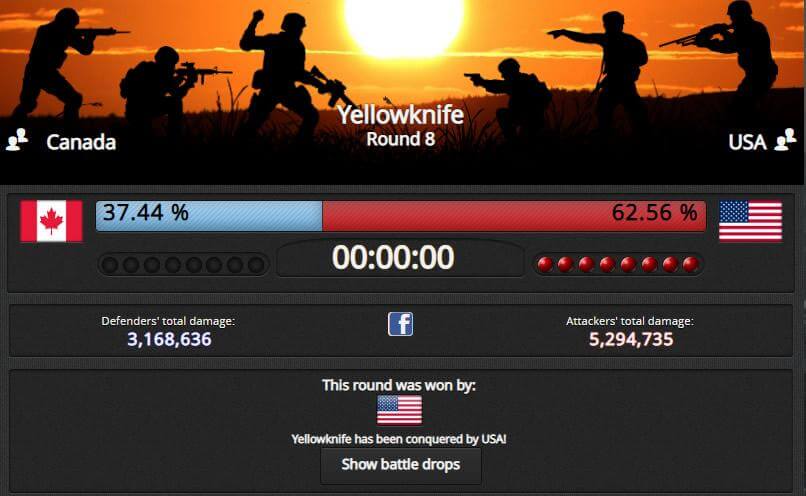
In E-Sim, international wars are nothing out of the ordinary.
Become an influential politician.
The second module is a politics. Just like in real life politics in E-Sim are an extremely powerful tool that can be used for your own purposes. From time to time there are elections in the game in which you will not only vote, but also have the ability to run for the head of the party you're in. You can also apply for congress, where once elected you will be given the right to vote on laws proposed by your fellow congress members or your president and propose laws yourself. Voting on laws is important for your country as it can shape the lives of those around you. You can also try to become the head of a given party, and even take part in presidential elections and decide on the shape of the foreign policy of a given state (for example, who to declare war on). Career in politics is obviously not easy and in order to succeed in it, you have to have a good plan and compete for the votes of voters.
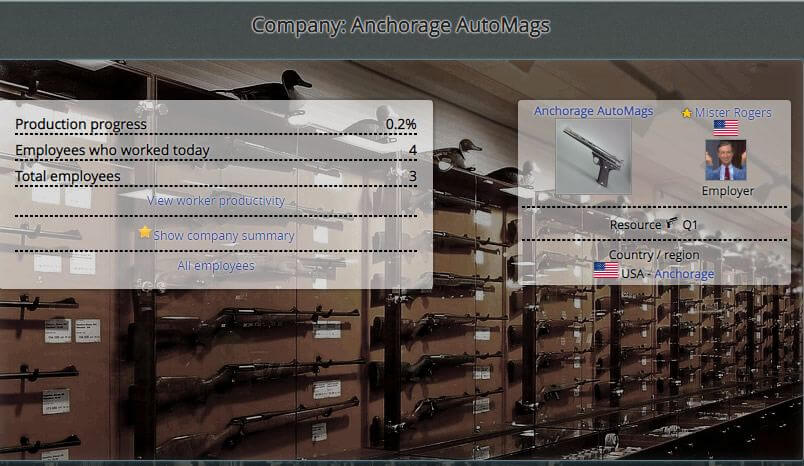
You can go bankrupt or become a rich man while playing the stock market.
The international war.
The last and probably the most important module is military. In E-Sim, countries are constantly fighting each other for control over territories which in return grant them access to more valuable raw materials. For this purpose, they form alliances, they fight international wars, but they also have to deal with, for example, uprisings in conquered countries or civil wars, which may explode on their territory. You can also take part in these clashes, although you are also given the opportunity to lead a life as a pacifist who focuses on other activities in the game (for example, running a successful newspaper or selling products).
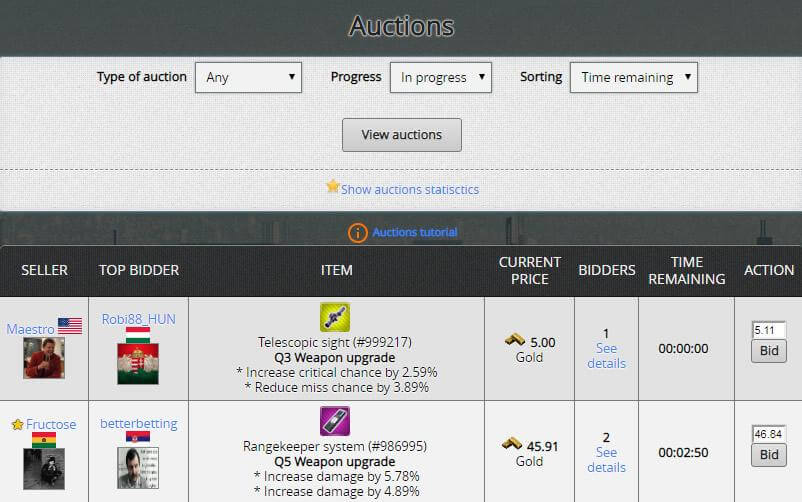
At the auction you can sell or buy your dream inventory.
E-Sim is a unique browser game. It's creators ensured realistic representation of the mechanisms present in the real world and gave all power to the players who shape the image of the virtual Earth according to their own. So come and join them and help your country achieve its full potential.
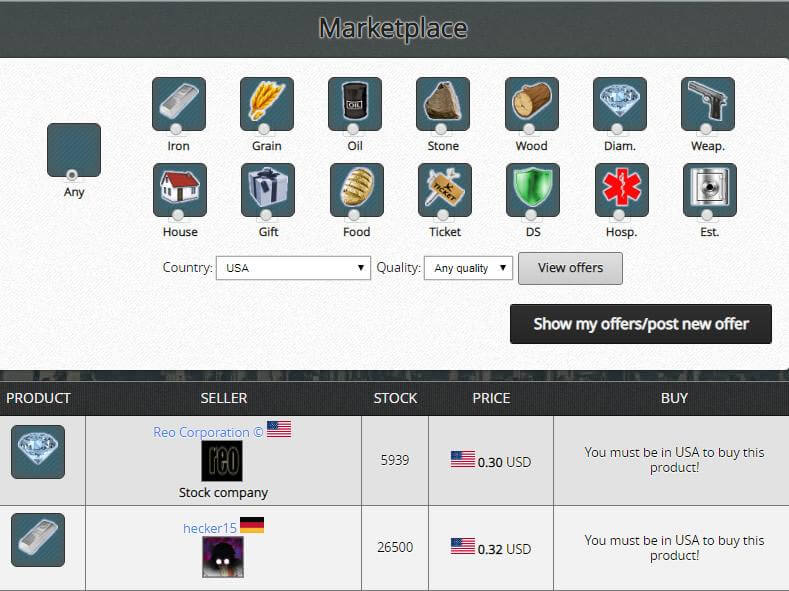
Invest, produce and sell - be an entrepreneur in E-Sim.
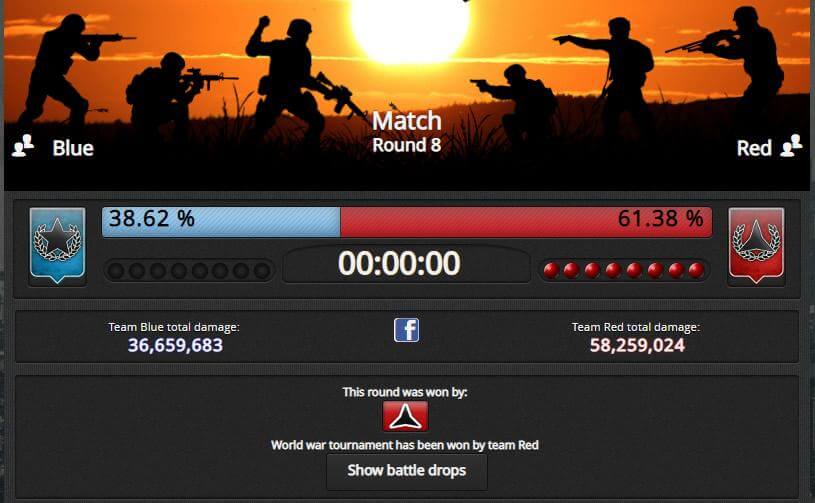
Take part in numerous events for the E-Sim community.
